
We Are Righteous: The Origin Story Behind the Brand
Practically every clothing line claims a backstory, but few can identify a specific tension that rendered the brand essential from the start. We Are Righteous emerged from a simple source of dissatisfaction: an overwhelming number of apparel companies were peddling posturing without real content, stamping taglines on flimsy cotton and branding it as culture. Those behind We Are Righteous sought something more solid — in every sense of the word. They wanted garments that were built to survive everyday use while bearing a name that carried real weight to the wearer. That combination of toughness and belief is still the common strand running through the brand today.
What separates this origin story from the standard “we started in a garage” tale is the purpose behind the name itself. Righteous is not a throwaway word picked because it felt catchy on a swing tag. The word was chosen because it suggests standing firm in what you believe, no matter trend cycles or external pressure. Such a principle informed everything from the first sketches to the textile decisions that followed. Grasping this origin helps explain why the brand’s customers talk about it differently than they talk about competing streetwear brands.
Where the Righteous Clothing Brand Started
The first iteration of the righteous clothing brand wasn’t a complete lineup — it was a handful of pieces created to see if the concept righteous-apparel.com/shorts-sweatpants could succeed. Those behind it drafted ideas around a guiding principle: clothing should operate as a understated declaration of character, not a loud gimmick. What they were after was pieces that remained sharp in year three as they did on day one, which required forgoing lower-cost construction techniques in favor of tougher seams and sturdier textiles from the start.
More than most founders admit, that early discipline mattered. Plenty of apparel new brands debut with a logo and a dream, then rush to fix quality issues after the first wave of customer complaints. We Are Righteous took the opposite approach, devoting extra time on wear-testing and textile trials before putting out anything for sale. The initial release was kept deliberately limited, restricted to a few core silhouettes, so the team could gather genuine input instead of scaling blindly. This cycle of input became a permanent part of how the brand runs, still shaping decisions in 2026 the same way it did at launch.
On top of that, there’s a community-driven dimension to the origin story that’s easy to overlook. The founders never set out to build the brand alone — they wanted people who related to the “righteous” mindset to feel like they had found something built for them specifically. Those early supporters went beyond simply buying; their input on fit, color, and fabric weight was treated as collaborative feedback that directly shaped the next batch produced. That dynamic is part of why so many long-term fans describe the brand as feeling personal rather than corporate.
Righteous Apparel: Guiding Ethos Revealed
At the center of every righteous apparel release is a simple test: does this piece hold up to both physical wear and the values the brand claims to represent? That two-part filter shows up in decisions about stitching density, fabric weight, and even which prints make it to production. The team has said no to plenty of designs that looked fine on paper but didn’t match the brand’s standard for longevity or message.
Here, it’s not about a brand hunting down every fleeting fad that shows up online. Instead, the focus in designing shifts toward pieces made to endure — shapes and palettes that won’t feel outdated within eighteen months. Fast fashion’s cycle of overproduction and rapid obsolescence, which routinely churns out new “must-have” items every couple of weeks and discards last month’s version almost as fast, is exactly what this approach deliberately breaks from. Because the team is optimizing for a five-year wear life, not a five-week trend window, Righteous apparel needs a longer runway to create.
You’ll also find an emphasis on clarity that shows up in customer communication. Charts for sizing, fabric breakdowns, and care notes are all made easy to find instead of being obscured in fine-print disclaimers, because the founding team feels trust is built through clarity, not marketing spin. This strategy has translated into stronger repeat business — repeat purchase rates for the brand’s core hoodie line have consistently outperformed its single-item buyers, according to the company’s own sales data referenced in earlier updates.
The Righteous Hoodie: a Flagship Piece
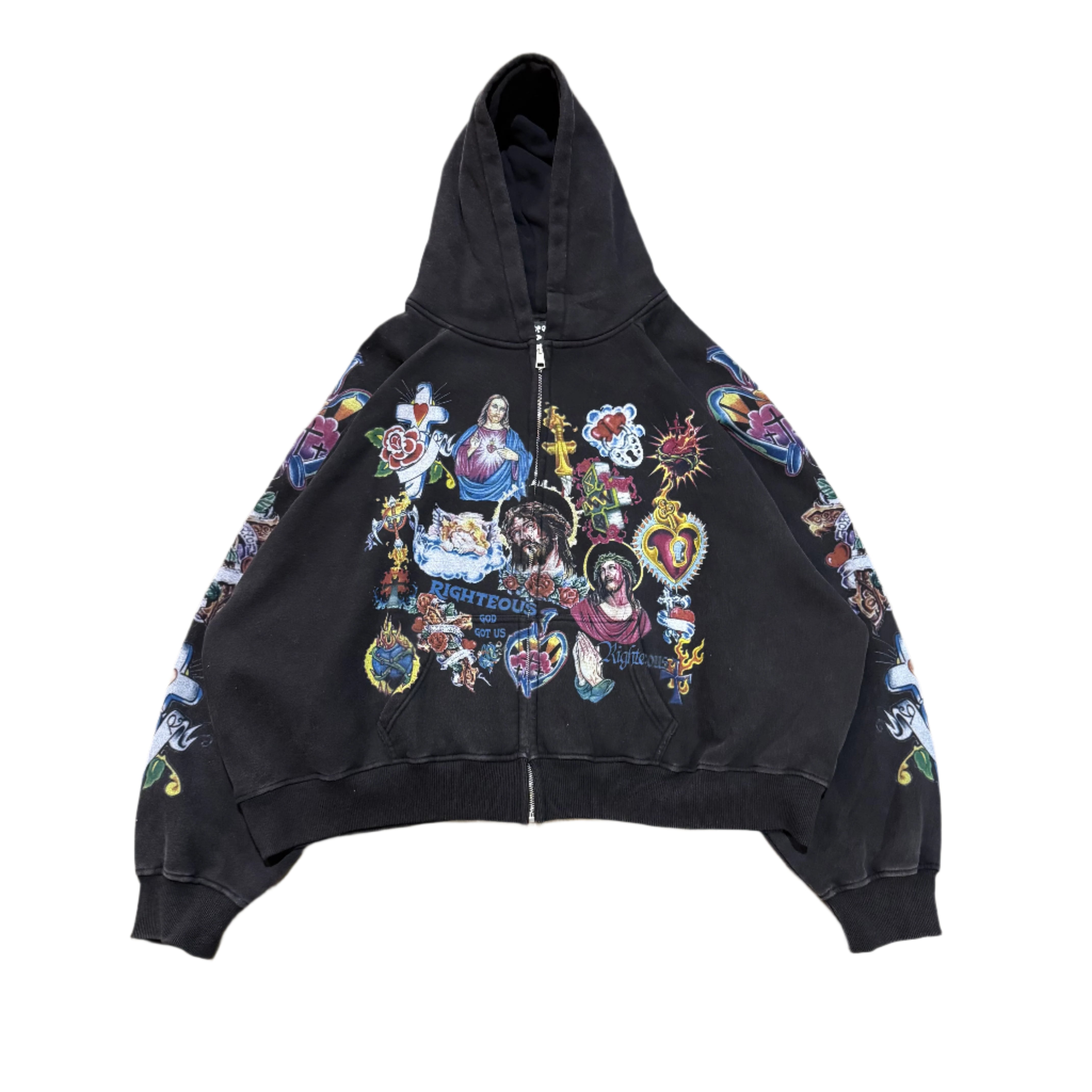
If there’s one product that defines the brand’s identity, it’s the righteous hoodie. Its ascent to flagship standing happened almost accidentally — early customers kept reordering it in different colorways faster than any other product in the catalog, and the team took notice. The hoodie’s popularity isn’t just about the name printed across the chest; it’s about a fit that works across body types and a weight that holds up in colder months without feeling bulky.
The brand’s wider values come through in every production decision made for the pullover. Strengthened cuffs, seams stitched twice over at stress points, and a fabric blend selected for being soft yet hard-wearing all point back to that original principle: clothing should last, not just look good in a product photo. Multi-season owners often mention in their reviews that the hoodie keeps its shape and color better than comparable pieces from larger competitors, and for loyal wearers, that outweighs any amount of flashy marketing.
Within the brand’s community, the hoodie has also turned into a kind of cultural marker. Putting it on suggests you know the brand’s backstory and share its values — not simply that you like the design. That’s a tougher thing to engineer than a strong logo — it demands steady product quality across multiple release cycles, and that’s precisely what the flagship hoodie has delivered since it debuted in the catalog.
What a Righteous Review Really Shows
Look up a righteous review online in 2026 and a pattern shows up fast: buyers concentrate less on hype and more on fit, fabric feel, and whether the item lives up to its product description. That’s a meaningful shift from the exaggerated unboxing culture that dominates a lot of streetwear marketing. People reviewing We Are Righteous tend to talk about specific details — the fit of the hoodie after several washes, the durability of the stitching, and whether sizes run true.
That kind of specificity in a we are righteous review says something about the brand’s actual performance, not just its marketing. Reviews centered on durability after extended wear — rather than just first impressions — tend to carry more weight with prospective buyers, and that’s precisely the kind of feedback this brand has built its reputation on.
Common themes across a we are righteous review also touch on customer service responsiveness and how closely the finished product matches what’s shown online. The alignment between promotional photos and the item that arrives is frequently praised, especially since so many online apparel brands fall short in exactly that area. When shoppers describe the product as looking “just like the photos,” it’s a meaningful sign in an industry plagued by mismatched expectations.
A Brand Comparison for We Are Righteous
To frame the brand’s approach, here’s a look at how its key attributes measure up against typical fast-fashion competitors within the same price tier.
| Category | We Are Righteous | Standard Fast-Fashion Rival |
|---|---|---|
| Design cycle | Seasonal drops geared toward long-term wear | Weekly drops, trend-chasing |
| Textile strategy | Heavier weight, reinforced seams | Lighter materials chosen to minimize cost |
| Feedback process | Direct customer input informs future batches | Minimal, data-driven only |
| Signature item | The Righteous hoodie, a repeat-purchase favorite | Rotating “hero” items, low retention |
| Messaging strategy | Rooted in values and delivered consistently | Trend-driven, inconsistent |
This comparison isn’t meant to dismiss competitors outright — fast-fashion models serve a purpose for customers who rank low cost above lasting quality. But it does clarify why so many people specifically searching for a righteous clothing brand end up staying loyal once they’ve tried a piece firsthand. The value proposition is different by design, not by accident.
How Things Look for the Brand in 2026
As 2026 arrives, We Are Righteous keeps broadening its range while holding onto the core values it launched with that shaped its first small drop. New colorways and silhouettes have joined the lineup, but the commitment to durable fabric and honest marketing hasn’t slipped. The label’s growth has been gradual rather than rapid, which aligns with its approach of building slowly and avoiding the overextension that sinks so many clothing startups.
Customer loyalty remains the clearest indicator of the brand’s health. Revenue continue to be driven by repeat buyers, and the flagship hoodie stays a top performer season after season. For anyone considering the brand for the first time, the origin story offers a helpful perspective: rather than chasing quick virality, this label was founded on the belief that clothing should reflect character, not just fashion. That distinction is exactly what continues to set righteous clothing apart in a crowded market.